
hAs homeowners look for better control, improved energy efficiency, and seamless smart-home integration, the choice between a Wi-Fi thermostat and programmable thermostat has become more important than ever. Both have their place in modern heating systems — especially underfloor heating (UFH) — but each offers distinct advantages that installers should understand when advising clients.
Here’s a clear breakdown of how the two thermostat types differ, how they work, and which is best suited for today’s heating demands.
What Is a Programmable Thermostat?
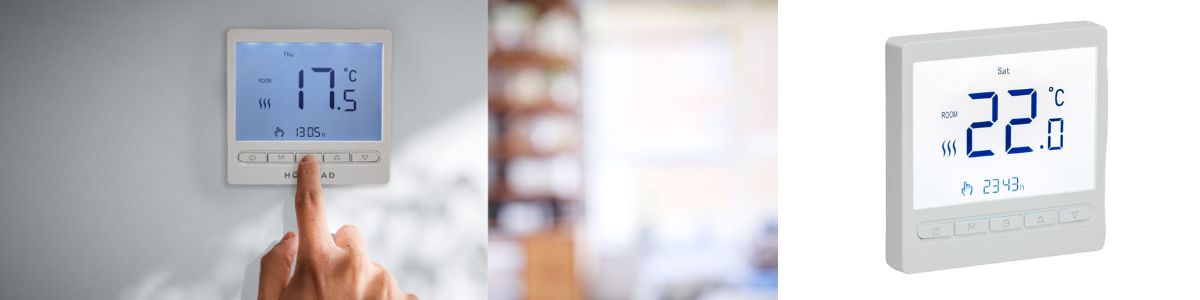
A programmable thermostat allows users to set predefined heating schedules. These schedules typically follow daily or weekly patterns — for example:
Morning warm-up
Daytime setback
Evening comfort settings
Night-time reduction
Programmable thermostats offer reliable, hands-off control once configured. They’re widely used, easy to operate, and suitable for customers who prefer simple, predictable routines.
What Is a Wi-Fi Thermostat?
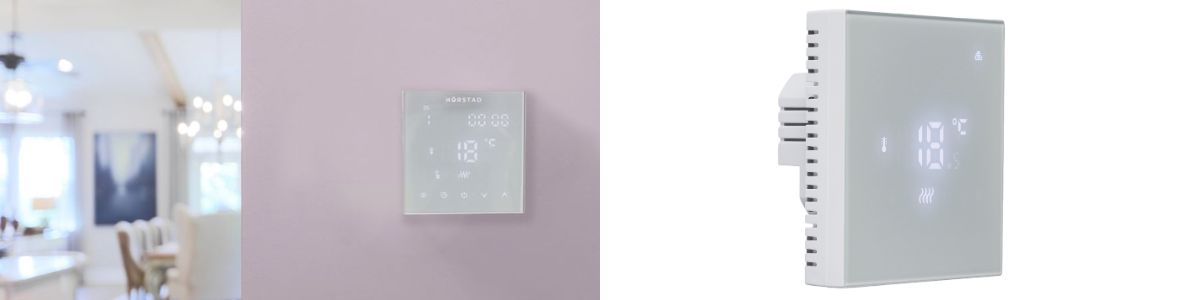
A Wi-Fi thermostat (also called a smart thermostat) connects to the home network and can be controlled remotely through a smartphone app. This connectivity enables:
Remote temperature adjustments
Real-time monitoring
Multi-zone control
Integration with smart-home systems
Usage reports and performance insights
For underfloor heating systems — where steady, responsive heat control matters — Wi-Fi thermostats offer an advanced level of precision and flexibility.
Key Differences: Wi-Fi vs Programmable
1. Control and Convenience
Programmable Thermostats:
Set and forget scheduling
Manual changes must be made on the device
Great for customers with fixed daily routines
Wi-Fi Thermostats:
Control from anywhere via app
Easy to override schedules remotely
Ideal for households with changing routines
2. Energy Efficiency
Both thermostat types help reduce energy waste, but in different ways:
Programmable:
Efficiency relies on well-planned schedules
Can save energy, but only if users keep schedules updated
Wi-Fi:
Empowers users with real-time control
Allows reactive adjustments (e.g., turning heating off from work)
Often includes energy usage insights that improve optimisation
3. Compatibility With Zoning
Underfloor heating systems often rely on multiple heating zones.
Programmable Thermostats:
Can control zones, but each zone requires separate manual programming
Less flexible for complex layouts
Wi-Fi Thermostats:
Easily manage multiple zones from one app
Provide room-by-room insights
Perfect for UFH where zone responsiveness matters
4. Smart-Home Integration
Programmable Thermostats:
Standalone operation
No connectivity or integration
Wi-Fi Thermostats:
Integrate with smart assistants (e.g., Alexa, Google Home)
Can link to wider smart-home routines
Attractive for modern customers wanting a connected home

Which Is Better for Homeowners?
Both thermostats have benefits — choosing the right one depends on the customer.
Choose a Programmable Thermostat if:
The customer wants simple, predictable scheduling
They’re not interested in smartphone apps or smart-home systems
Budget is a priority
Choose a Wi-Fi Thermostat if:
The homeowner wants maximum flexibility
Remote control or smart-home integration is important
They have a multi-zone heating system like UFH
They want ongoing insights into system performance
Why Wi-Fi Thermostats Are Becoming the New Standard
For many installers, Wi-Fi thermostats are quickly becoming the default recommendation. Their ability to adapt to changing lifestyles, integrate with modern systems, and offer superior zoning control makes them particularly effective for underfloor heating setups.
They reduce call-backs, improve customer satisfaction, and give homeowners a clear understanding of how their heating system is performing — all from their phone.
Conclusion
The choice between a Wi-Fi thermostat and a programmable thermostat ultimately comes down to convenience, flexibility, and expectations for modern heating control. While programmable thermostats remain a reliable, cost-effective option, Wi-Fi thermostats offer a higher level of functionality that aligns with today’s connected homes.
Both play an important role — but as customer demands evolve, Wi-Fi thermostats are quickly becoming the preferred solution for achieving precise, efficient, user-friendly heating control.

